Friday, May 27, 2011

Design Centred Approach in ICT To Conserve Energy

I am currently researching on an initiative for my Telecom Class. Its called the Green Touch. Green Touch is a consortium of companies and educational institutions that seeks to improve the energy efficiency of ICT networks by a factor of 1000. Carnegie Mellon University is a part of this initiative. The exponential growth in wireless and mobile telecommunications has led to widespread connectivity across the globe, even in the remotest villages of Africa. However there is an environmental cost associated with this unprecedented expansion. "The global network and technology required to run it produce 250 million tons of carbon dioxide emissions annually, roughly the same as is produced yearly by 50 million automobiles (20 percent of all the autos in the U.S.), according to Green Touch" (Scientific American). Green Touch therefore seeks to redesign networks to decrease the carbon footprint of the ICT Industry.

When we talk about design centred approach in innovation, Green Touch has developed a prototype Large Scale Antenna to minimize the amount of power required to send a signal across the air in wireless systems. The Large Scale Antenna uses multiple antennas to minimize the amount of power required to transmit a signal across the wireless channel. The proof of concept proposes that the power consmption is significantly reduced as the number of antennas are increased. " For example, an antenna array comprising 100 elements would transmit only one percent of the energy transmitted by a single antenna, for the same quality of service."(CNET)

Multiple Antennas were previously utilized for capacity gains but now they can also significantly reduce power consumption. The basic concept is "focusing" a narrow radio beam through multiple antennas instead of using one antenna to disperse the signal over the whole channel which comparatively consumes more power over a wider area.

I have shared this piece to demonstrate how simple design restructuring can fuel such immense social gains. Global Warming effects are already visible in the form of steady melting of glaciers and floods. Therefore its imperative that we do whatever it takes to reduce our overall carbon footprint. This technology is nascent, however once developed can have wide ranging impact on the global environment.

Some of the questions that come to mind are:
  1. What sort of investment would be required to set up an infrastructure for Large Scale Antennas?
  2. Would low income governments be willing to invest in this infrastructure?
  3. What sort of government policies would be required to facilitate such large scale investment?
Links

Monday, May 23, 2011

Maybe Social Enterprise in the Education Industry?

Why this article is relevant?

After the Grameen Bank video, I remember reading articles that say micro-finance is not without its criticisms. Some poor farmers comit suicide because of some unfortunate and unexpected circumstances rendering them unable to repay their micro-debts. We can see examples like this in India, Bangladesh, and Cambodia, just to mention a few. A lot of people are now questioning whether or not micro-finance really works. My unfounded theory is that micro-finance is not the 'silver bullet' to the poverty problem. It has to be a combination of other things, for instance, the knowledge on how to use your money and manage it effectively. This knowledge can be found in education. Can we do something similar to micro-finance but in education? Maybe something called 'micro-education'.

So I typed in Google the word 'micro-education' and came across this interesting article.

Non-profit or for-profit?

Which kind of organizational structure is better for transforming education: a non-profit model dedicated entirely to the mission of change, or a for-profit model with serious financial backing? At a recent Stanford/MIT VLAB event, Sal Khan of Khan Academy and venture capitalist Philip Bronner had a great discussion on this topic (watch the first minute or so of this, then fast-forward to 1:08:20):
As an economist, I tend to gravitate towards the profit motive as second-to-none for allocating resources efficiently. However, the assumption underlying that conclusion is that value is reflected in people’s willingness to pay. In a market economy, if it costs me $10 to make a pair of sneakers and I can sell them for $20, then the market sends me the signal that I should be producing sneakers. Done and done.
But in education, people’s willingness to pay isn’t closely related to the actual value they receive. The main consumers of education — children — have no money of their own, so education is funded by parents or the government, either as an investment in children’s future human capital or out of a sense of social justice. Regardless, there’s no easy way to put a price tag on any individual bit of education (a music class, an economics lecture); therefore a market system to deliver educational services is going to be a very deeply flawed market indeed, and produce all kinds of crazy results. And as in the anecdote Khan shares, the profit motive can lead to private online colleges actually seeking out students who won’t receive a real return on their educational investment.
So there’s a strong argument to be made that educational institutions themselves should be non-profit: they should have a fiduciary responsibility to educational integrity, not their shareholders. But as Khan says later in the video, this clearly doesn’t extend to all the tools that are used in education. At an extreme, the school buses that drive kids to school are made by for-profit companies, as are the light bulbs and the computers in the classrooms. Nobody would want their kids to drive in buses, or learn on computers, that were developed by non-profits.
In other words, it makes sense for educational infrastructure to be supplied by for-profit organizations, even if educational institutions should be non-profit.
The question for education technology companies, then, is this: are we more like schools, or more like computers? Do we seek to deliver educational services ourselves, or do we seek to be a tool that educators can use to deliver those services? The names we choose are a good indication of which side of that divide we see ourselves on: “Khan Academy” sounds like a school (non-profit), while “Blackboard” sounds like infrastructure (for-profit).
Over the next few years, though, the line between educational services and educational infrastructure is going to get blurrier: Aplia and Grockit, for example, are at once educational infrastructure and educational content. In this new world, we’re going to need a new type of organization (possibly like a B Corporation) that blends the best of the non-profit and for-profit worlds, while avoiding the worst excesses of both. As Osman Rashid, founder of Chegg and Kno, puts it later on the same video: “You need the soul of a non-profit, and the mentality of a for-profit.”

This article can be accessed from http://microeducation.org/2011/04/29/non-profit-or-for-profit/.

So there is something already called "Micro-Education". But their mean of 'micro-education' might be a little different from the project I have in mind. Anyway, what makes it interesting to post this article is the author's question about whether or not educational institutions should be for-profit or non-profit. I think this is where Social Enterprise might come in to fill that gap.

My questions for further consideration would be:
1. How to tailor your curriculum to fit the scheduling demand of people at the bottom of the pyramid?
2. How to make sure that your operation is sustainable? To put it another way, who would pay?
3. What kind of education do people at the bottom of the pyramid need?

Tuesday, February 8, 2011

A Thought on Sustainability

For pundits and apprentices alike, social innovation requires clarity on the issue of sustainability. In order to add social value or have a positive social change, an innovation must observe the triple bottom line of financial, social and environmental sustainability. A myriad of examples are out there of innovations that appear to add social value but in the long run they do not: subprime mortgages, easy access to employment in fast-food restaurants, and corn-based ethanol. The way to test their sustainability is to project an innovation to a global dimension and conduct a cost-benefit analysis of its consequences: recession, obesity, and high price of a staple food like corn which feeds tens of millions south of Rio Grande. The fact that hundreds of millions of people in developed countries have a very comfortable lifestyle and human development indicators show significant progress over the course of a century, does not imply that this development has been achieved in a sustainable manner. In fact, it hasn't: if every human being on the planet had consumption habits as Americans (or rich people around the world, for the matter), we would need 5.4 planets Earth to support our lifestyle (National Geographic State of the Earth 2010, p. 2). [For more on the human footprint on the planet, see here] Therefore, much of the social and technical innovation that has thrusted wealthy nations to improve their standards of living has come at a cost to everyone living in the planet. So far, the problem is not as grave as it will be when China and India -a third of the world's population- reach such levels of consumption. At the pace they have been growing this is expected to happen in the coming decades. This problem adds a constraint to social entrepreneurship, as it does not suffice to add social value, but it must be maintained in the long run as well. Do the test yourself: take any innovation, project its scalability at a global level, and if its financial, social or environmental costs exceed its benefits, then it may need a bit more thinking.

Friday, December 3, 2010

U.S. Social Innovation?

When I think of Social Innovation I usually think of technology or improvements in poverty-stricken third world countries. I think of areas with little or no economic foundation or significance. I think of areas or communities that aren't self-sustaining or could most benefit from innovation. Maybe it's due to my lack of exposure to social innovation but I enjoyed reading improvements and innovations that are being made right here in the U.S.

Last week we discussed the X Prize model that could improve education or illiteracy in poverty areas. Today, an article in the N.Y. Times outlines the improvements being made in Baltimore schools where interestingly, a Cuban immigrant, Andres Alonso, was hired by the school board to bring positive change through reform. Is Social Innovation confined only to creating new technology or can it also include changing behavior in areas of need?

In this Baltimore school district, 84 percent of students are on free or reduced-price meals, which is a measure of poverty. Dropout rates are incredibly high. The murder rate is six times that of New York City. Six administrators had been hired over the past six years.

Dr. Alonso's approach was to change the behavior and culture of these schools. Previously, administrators had focused too much on test scores, but Alonso worked to create a positive perception, get buy-in from faculty and parents, and go to the root of the problems.

In class we defined innovation as "the act or process of inventing or introducing something new." Can we use Dr. Alonso's success in Baltimore schools in other poverty areas in the U.S.? What about other countries? Would cultural differences, traditions, or other barriers prevent similar education reform?

Thursday, December 2, 2010

Helping Africa Feed Itself

Currently, African nations are a net importer of food supplies. While worldwide production has generally increased, in parts of Africa production has remained stagnant over the past 40 years. This is despite the fact that 70% of Africans are engaged in agriculture. There remains upwards of 250 million undernourished Africans throughout the continent. Traditionally, as explained in this article from Reuters, investment in Africa in the agricultural sector has been from philanthropic organizations and developed governments.

Recently, however, for-profit private investors have begun, with the help of nonprofits, to invest in mid-sized African farms, helping to develop infrastructure as well as improved farming techniques and advances in farming technology. Specifically, the article describes the TransFarm Africa Transformation Fund (FTA), a private equity investment aiming for 15% returns from aiding mid-sized commercial farmers in processing and distribution that include small farmers in their operations. There are many other private firms involved in similar investments, all of whom are attempting to avoid the typical stigma of “land-grabbing” associated with private investment on the continent. To do this, they are collaborating with local business groups.

While foreign government and foundation investment is critical, the scale of food shortages are so great that private investment is needed. Evidently, there are many opportunities for private firms, and specifically social entrepreneurs to invest in African agriculture, with the social mission of helping the malnourished of the continent, while still generating revenue to create a sustainable business. As time goes on, and food shortages become more and more of an issue, not only in Africa, but also throughout the world, the opportunities will only increase. In terms of the future of social innovation and enterprise, this sector is poised for major growth.

Do you see issues arising with the exploitation of small farmers with increased private investment? In addition, will there be enough space for social entrepreneurs to get in on the action, where it seems that perhaps traditional businesses are also interested? What other opportunities do you see for the future of social innovation on the continent?

Tax and Aid (6)

There is little doubt that governments will have to play a major role in alleviating the world’s problems, from climate change to famine. Of course, nonprofits, foundations, and more recently, social enterprises are also major players. However, all of these organizations depend on world governments, be it funding, other forms of financial support, or policy, to survive and succeed. Social enterprises in particular, being businesses, need government support in the form of laws and policies to survive in an open market. Richard Brooks, in his article, Tax and aid: To trade with loaded dice, from November 29th in the Guardian, discusses how large multinational corporations can inhibit governments, particularly those of very poor countries, from making a significant impact on these social issues.

He uses SABMiller as an example to highlight multinational tax avoidance, especially in poor countries: The SABMiller brewery located in Ghana only paid 0.3% of its revenue back as tax from 2007 to 2010. The company is using loopholes in local and international laws and creative financing arrangements to avoid paying taxes. In the country, corporate taxes form a significant amount of revenue for the government. Obviously, by avoiding these taxes, SABMiller is creating a significant negative effect on the governments operating income. Such tax avoidance is repeated by other multinationals throughout the world in both developing as well as developed countries. Obviously, this could be a huge source of revenue for governments, who could put the money to good use in helping their people. Specifically for poor nations, this would allow them to reply less on foreign aid, which considering the current economic climate and budget tightening, is likely to decrease.

In terms of social enterprise, money lost from tax avoidance could actually go to promoting social businesses whether it is direct funding, or other financial support mechanisms. Obviously, intelligent policies and laws are still needed, but closing tax loopholes and preventing the offshoring of funds could promote assistance to social enterprises and social causes in general. All that is needed is the political will, which sadly, is really lacking. Do you think political will and capital could be generated if there was more of a focus towards tax avoidance being a social issue? At the moment, it is described by opponents as a way to expand government, and by proponents as the corporate world being negligent. Additionally, do you think poor governments could go about collecting taxes without scaring off these businesses, without help from developed nations (where it seems there is a lack of political will)?

Don’t Use the Word “Charity” (4)

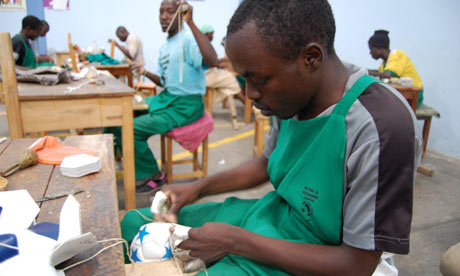
This article is an interview with Will Prochaska, the director of Alive & Kicking, an African social enterprise using sports, specifically, the manufacture of soccer (and other sport) balls to provide recreation and promote health knowledge amongst children as well as create jobs for adults in low income areas in Kenya and Zambia. In this interview conducted by Kerry Ann Eustice of the Guardian, Prochaska discusses his enterprise and the challenges he has faced in developing and growing his business, particularly when he is committed to fair pay for his employees and his competitors are not.

He has established a sustainable business by differentiating his product with the help of retail outlets in both Kenya and Zambia. His marketing strategy involves going into retail outlets and highlighting the low quality and poor labor conditions in the manufacturing of his competitors’ products in other countries. He compares this to his own manufacturing process, educating his potential customers about the benefits of a locally produced product.

This is a very interesting example, particularly as it relates to other aspiring social enterprises in their development and growth. As, Prochaska indicates, his business had particular difficulty in establishing themselves as an independent operation, free of outside support, while still providing a valuable social service. To overcome this difficulty, the mentality of the entire organization had to change, some of which was achieved through more ownership and responsibility by staff within each operation. He also provides some advice to other enterprises, recommending that everyone involved in the organization needs to understand the need for the business to operate independently, while making the case for avoiding unrealistic expectations inside and outside the company by overtly pushing the social mission.

What do you think about Alive & Kicking’s marketing model? Would it be effective (and sustainable) in other situations for other businesses? In addition, do you agree with Prochaska that it is necessary to push away from the charity (or social enterprise) label to be sustainable?

Tuesday, November 30, 2010

A Surprising X Prize

I was excited to read in this article that the X Prize Foundation announced they would be putting up money for a competition with the goal of cleaning up oil from the BP spill.

However, when I went to the X Prize Foundation homepage, I didn’t find any more details.

What did catch my eye, though, was a little blurb that said “X PRIZEs are being developed that will end our addiction to oil and stem the harmful effects of climate change.” I would loooooove to see how this plays out…

I attended a rather depressing panel discussion sponsored by the E-Cubed club during lunch today: 3 professors (an economist, an environmental attorney, and a former astronaut who’s now in the Environment and Public Policy school) all basically said that they don’t have big hopes that any significant climate change legislation will be passed any time soon.

In light of that grim outlook, it’s great to read about prizes that could stimulate innovations that reduce our carbon footprint. After all, we need something to drive change. If it’s not going to be Congress, what will it be?

As we read in the X Prize article for this week’s class, the X Prizes excite people, “pulling” them toward a certain goal. If that goal can be an end to oil addiction, we’ll all be better off! Especially if the prize delivers on what it promises: growing awareness of the market for the winning (and even non-winning) technologies.

There are a lot of land use, environmental and infrastructural issues associated with the energy use changes we’d likely have to make to facilitate a massive switch to renewables and other technologies. Are these obstacles to big for a prize to overcome? In other words, does this challenge of breaking free from our oil addiction require more cooperation and investment than X Prize participants will be willing to give?

Masdar...Resistance is Futile, You will be Assimilated

Akin to the Borg, Masdar's zero waste city in the middle of the desert has no utility for resistance from detractors. The Masdar corporation has suffered recent set backs from pushing back their launch date to 2020, to loosing the provost at the Masdar Institute for Science and Technology, to dealing with a real estate projection which predicts future difficulty in finding enough residents to fill the future city of Masdar. But Masdar continues to push on, moving forward with their plans to build the underground personal transport system, No one said it would be easy, but is it worth it. Will the ideal of a zero waste world yield from examples like the city of Masdar? Does the push for a community of innovators to be inspired by such imaginative prowess create useful achievable advances in technology or do they lead to machinations like that of the LilyPad, the floating city. Designed by Vincent Callebaut as part of a competition sponsored by the Oceans conference in 2008. The Lilypad would house 50,000 people displaced by the changing landscape due to global climate change. The design is awe inspiring and maybe more science fiction then innovation. But if Masdar succeeds then maybe these more imaginative approaches to the Green movement will become more achievable just by virtue of precedence. And competitions like those sponsored by the Oceans conference or the X Prize Foundation might get us there faster. However using competition as a driver of social innovation is not a new concept. I have witnessed this method work well in the class room. Kids love competition, its a great tool to engage everyone in the learning process, but the results are mixed when used soley it to increase comprehension. But does it mean we should not try it all. X Prize Foundation president Thomas Vander Ark has interesting perspective on the issue. Having worked on both sides of the fence in the social innovation/reform field he understands that "although prizes are no silver bullet, I am confident that they will be a powerful change lever in the social sector." Let's hope that Masdar will make it!

The Social Innovation Network

Attempting to guess where the future of social innovation is heading is an incredibly daunting task. Not only is technology evolving at warp-speed, but the field itself is just as quickly shifting to broaden its appeal and impact. One of the technologies that has certainly fueled the potentials of innovation has been the rise of social networking. With facebook and YouTube, massive numbers of people can connect with each other at a low (or no) cost. This interconnected web can direct energy towards large social movements and has the potential to make activism and social change trendy and hip and not just something for peace-loving hippies. The power of these tools can be seen in movements like the green-clad support of the "Iranian Revolution" and the public outcry that occurred with the deaths of the gay teens. How much actual positive change these movements have can be debated, however, they certainly show a shift in how we communicate and spread information through technology and graphic imagery.

With this knowledge and access to huge populations, social change and innovation now has a platform to bring together diverse minds and potential funders. With the rise of sites that seek to connect social innovation with actual human capital, many projects have been realized that seek to make lasting sustainable change in low income populations. An example is Architecture for Humanity, which brings together architects, designers, and entrepreneurs to solve housing issues around the world. Another project has been the Vlogbrother's Project for Awesome, which annually takes over YouTube for one day a year to post videos about charities and social innovations to raise awareness and potential volunteers. Social innovation has great potential to tap into these networks and resources to expand their mission and connect around the world. 

While social networking has and will continue to increases and spur innovation, it will also create challenges for social ventures in the future. With the ease of creating a facebook page for your cause or linking in to a thousand different networks, the question arises of how up-and-coming social ventures and innovation will stand out and actually receive needed attention to make change. On one hand, this will allow only the truly innovative ventures to rise to the top, while on the other, it could hinder great idea makers by placing them in the middle of undefined cyber noise. 

One project looking to help social innovators stand out above the crowd is an organization called LoudSource. Loudsource raises funds to help advertise social projects through a variety of media. From billboards and TV to ad on your iphone app, LoudSource has created a fairly simple business plan: 


There hope are then "that funding advertising maximizes individual impact by reaching completely new communities for people's favorite causes. By bringing unexpected ideas and creative solutions to mainstream channels, we will ultimately build momentum for some of the best work happening in the world." Looking forward, it will be the innovators and entrepreneurs who can harness the tools at their disposal to raise awareness and efficiently create lasting change. 

It will be interesting and inspiring to witness how the field of social innovation continues to evolve to meeting the challenges and opportunities that technology and communication are bringing to the world. Hopefully these changes will make progress that can be felt by all.

A few questions:

What other online tools have potential for evolving how social innovation is integrate into society?

Has the social networking movement done more to damage the plight of social innovators by making people want instant gratification and by creating generation of kids who have their focus pulled in a million different directions? Can these technologies be compatible with lasting sustainable social change?

Education, public policy and innovation

A recent New York Times opinion discussion noted that top French academics are coming to the U.S. to enjoy the increased salaries, freedom and competitive energy our academic environment provides. Many believe that our universities, with their competition and vast bank accounts, are somewhat responsible for the American culture of innovation -- think Stanford and Silicon Valley, or MIT and Harvard and the Boston biotech industry.
But in a time of decreased government funding for education and research, someone has to fund this innovation. The skyrocketing costs of tuition leave little room for doubt as to who is funding the continued progress of American academia. (Some universities raised tuition 15% this school year.)
The burden that major research universities levy on their students in the form of debt is unsustainable in the long-term. But the debt our own government is facing makes increased federal support for innovation a challenging proposition. Who should pay to create and maintain an academic environment that fosters innovation?

Is the X Prize Foundation doing enough?

When reading the X Prize article, I found myself intrigued by the notion of using competition to fuel social progress. Like Vander Ark, I agree that “a prize mechanism is very useful” when dealing with ambiguous problems (15 minutes, 2008). This intrigue turned to disappointment, however, upon review of the foundation’s website.

Despite Vander Ark’s expression of confidence in the foundation’s ability to “identify several entry points where prizes can make a big difference,” ‘Education and Global Development’ is the only of the group’s four prize areas (energy and environment, exploration, education and global development, life sciences), for which there are no planned future prizes listed on the organization’s website (15 minutes, 2008). This speaks to either a lack of interest in the educational sector or, as Vander Ark referred to in the article, evidence of a lack of investment “spent in this field because the returns to investors have been weak” (15 minutes, 2008).

In either case, it is disappointing that in the 2 years since the article was published, the potential to improve educational issues through competition that Vander Ark spoke of has remain untapped. This is especially true due to the widespread education and literacy issues currently present within both the developed world, such as the US, and developing countries.

Although developing solutions to issues related to getting laymen to the moon or producing a car with lower fuel emissions is arguably more exciting than coming up with a sustainable method of educating inner city children, I contend that the latter is equally if not more important (Home Page). Thus, I hope that the X Prize Foundation soon lives up to Vander Ark’s words and funds a prize competition aimed at “focus[ing]…attention on an important education goal” (15 minutes, 2008).

As of now, the foundation’s website contains no concrete evidence of plans for doing so. They are however soliciting ideas for the focus of such a competition, be it on the national or international scale. I encourage interested parties to participate in this solicitation. Ideas can be submitted at the following link: http://www.xprize.org/x-prizes/propose-an-x-prize

Sources:

15 minutes. (2008, Winter). Stanford Social Innovation Review , p. 3.

Home Page. (n.d.). Retrieved 11 30, 2010, from X Prize Foundation: http://www.xprize.org/